How to choose a padel racket
As with any racket sport, choosing a racket that suits your skill level and playing style is essential. The right padel racket can improve your comfort, confidence, and overall performance on the court.
During control: Control-oriented players focus on accuracy, consistency, and defensive play. They prefer rackets that offer excellent manoeuvrability and precision, allowing them to place the ball exactly where they want it.
Attack: Attacking players enjoy taking control at the net, putting pressure on their opponents, and finishing points with powerful shots. They typically look for rackets that provide extra power and stability during aggressive play.
All-Round: All-round players combine attacking and defensive techniques. They need a versatile racket that provides a good balance between power and control, allowing them to adapt to different situations on the court.
Before looking at the technical details, let's explore the three main playing styles.
Beginners- If you're just starting to play padel, we recommend choosing a comfortable, lightweight, and easy-to-handle racket. A forgiving racket with a generous sweet spot will help you develop your technique, improve accuracy, and enjoy the game from the beginning.
Intermediate- As your skills improve, you'll want a racket that helps you take your game to the next level. A versatile racket offering a balanced combination of power and control is often an excellent choice. At this stage, you may also begin to recognise your preferred playing style. If you enjoy attacking, you might benefit from a more power-oriented racket. If you prefer controlling rallies, a control-focused model may suit you better. Remember that choosing an attacking racket doesn't mean you can't play defensively – it simply means the racket is designed to provide additional advantages during attacking shots.
Advanced- Experienced players have developed their technique, tactical awareness, and understanding of their playing style. At this level, choosing a racket becomes more personal. We recommend selecting a model that complements your strengths and helps you maximise your performance on the court.
Padel Racket Shapes
There are three main padel racket shapes: round, teardrop, and diamond. Each shape has different characteristics that can influence a player's style of play.
Round Shape
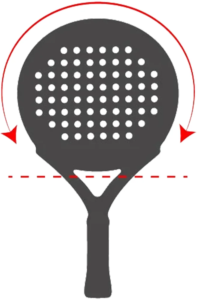
Round padel rackets typically feature a lower balance point, closer to the handle, making them easy to manoeuvre. One of their main advantages is a large, centrally positioned sweet spot – the area of the racket face that provides the most effective ball contact. This helps players achieve greater consistency and control, even when shots are not perfectly centred. Round rackets are particularly suitable for beginners and players who prefer a controlled, defensive style. Their main trade-off is that they generally offer less effortless attacking power than more head-heavy designs.
Teardrop Shape
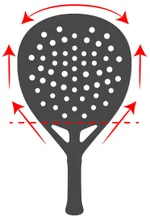
Teardrop-shaped rackets combine characteristics of round and diamond-shaped models. They typically feature a medium balance point, providing an excellent combination of power, control, and manoeuvrability. This makes them a versatile option for players who want to perform confidently in both attacking and defensive situations. Teardrop rackets are particularly popular among intermediate players, especially those transitioning from the beginner level who are still developing their preferred playing style.
Diamond Shape

Diamond-shaped rackets are primarily designed for players who favour an aggressive, attacking style. These rackets generally feature a higher balance point and a sweet spot positioned towards the upper part of the racket face. This design helps generate additional power, particularly during overhead shots and smashes. Diamond-shaped rackets are often preferred by advanced and professional players who have developed strong technique and want to maximise their attacking potential. However, their higher balance and typically more demanding sweet spot can make them less forgiving and harder to manoeuvre. For beginners, a lighter, more forgiving racket is usually a better starting point.
Racket Balance
A racket's balance point plays an important role in how it feels and performs on the court. Although balance is often related to racket shape, it also depends on the racket's construction and weight distribution.
More than 275mm, racket is called heavy racket (Head Heavy)This provides greater power but reduces the racket's manoeuvrability.
Around 270mm, racket is called neutral racket (Neutral Balance), this offers a good balance of power and control.
Lower than 265mm, racket is called light racket (Head light), this provides easy manoeuvrability and excellent control.